
Tax season can feel overwhelming, especially when state tax laws differ dramatically across the United States. While many taxpayers focus heavily on their federal returns, state taxes can have an equally significant impact on their finances. Missing a filing requirement, overlooking a valuable credit, or misunderstanding residency rules could cost hundreds—or even thousands—of dollars.
The good news? Understanding state taxes doesn’t have to be complicated.
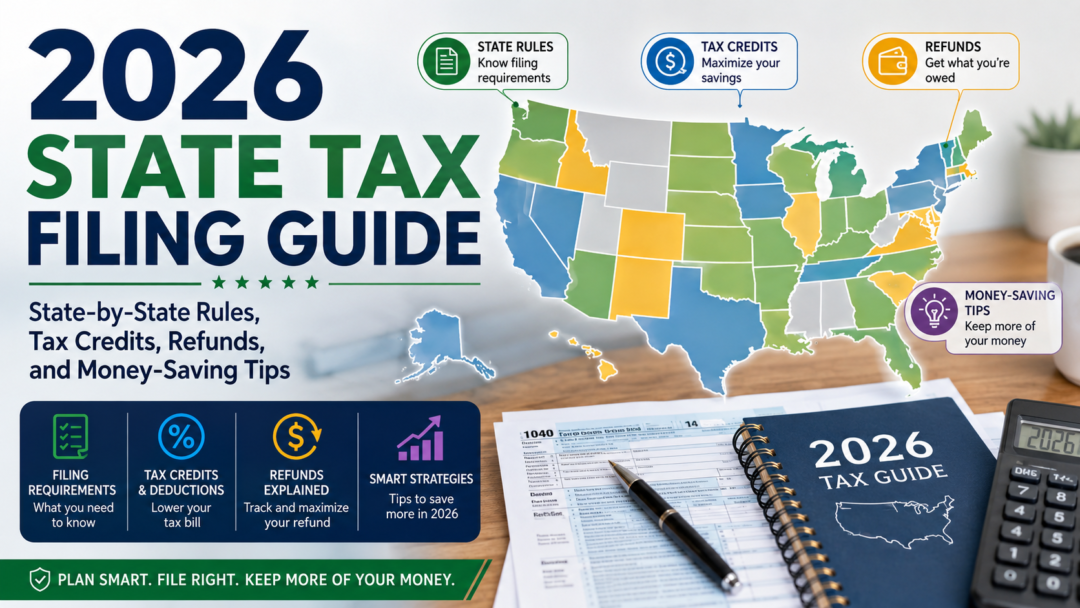
This comprehensive 2026 State Tax Filing Guide explains who must file, how state tax systems work, the most valuable tax credits available, refund strategies, and practical money-saving tips that can help maximize your tax benefits. Whether you’re a first-time filer, a remote worker, a retiree, or a small business owner, this guide will help you navigate state taxes with confidence.
Why State Tax Filing Matters More Than Ever in 2026
Many taxpayers assume that once their federal taxes are complete, the hard work is done. However, state tax obligations often involve separate rules, deductions, deadlines, and penalties.
Several trends continue to reshape state taxation in 2026:
-
- Increased remote and hybrid work arrangements
-
- State-specific tax credits for families and homeowners
-
- Growing electric vehicle incentives
-
- Expanded clean energy tax programs
-
- New residency enforcement measures
-
- Enhanced digital filing requirements
Ignoring these changes could result in missed savings opportunities or unexpected tax bills.
Which States Have No State Income Tax?
One of the biggest differences between states is whether they impose an income tax.
As of 2026, the following states generally do not levy a traditional state income tax:
| State | State Income Tax |
|---|---|
| Alaska | No |
| Florida | No |
| Nevada | No |
| South Dakota | No |
| Tennessee | No |
| Texas | No |
| Washington | No |
| Wyoming | No |
| New Hampshire* | No earned income tax |
*New Hampshire taxes interest and dividends differently than earned wages.
Living in a no-income-tax state can provide substantial savings, but residents may face higher property taxes, sales taxes, or other fees.
Understanding State Residency Rules
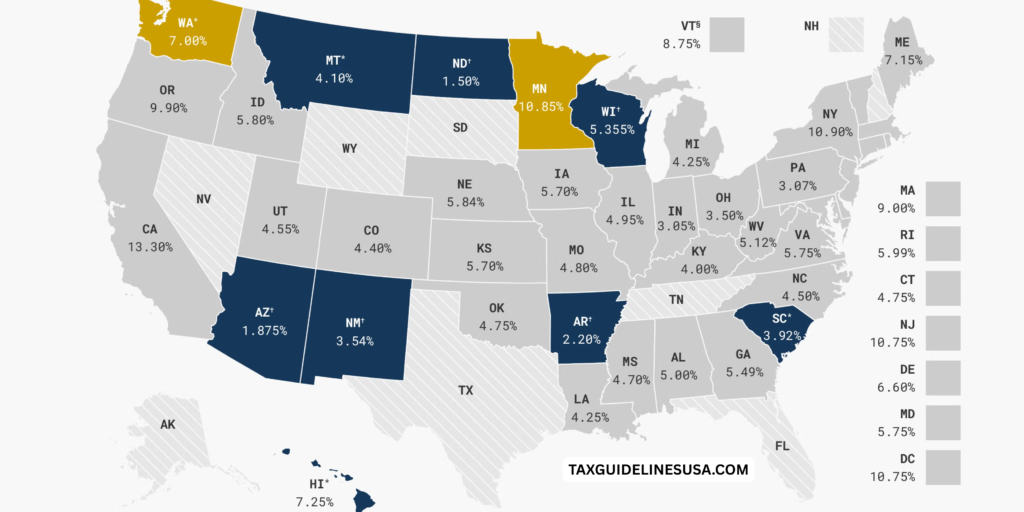
Residency status determines where you file taxes and how much income is taxable.
Most states classify taxpayers into three categories:
Full-Year Residents
You lived in the state for the entire tax year.
Generally, all income is taxable by that state regardless of where it was earned.
Part-Year Residents
You moved into or out of a state during the year.
You typically report income earned while residing in that state.
Nonresidents
You live in one state but earn income in another.
Examples include:
-
- Remote workers
-
- Commuters
-
- Independent contractors
-
- Seasonal employees
Nonresidents often need to file returns in multiple states.
State-by-State Tax Filing Overview
While every state has unique requirements, most fall into several broad categories.
State Tax Quick Reference Table
| State Category | Examples | Key Benefit |
|---|---|---|
| No State Income Tax | Texas, Florida, Nevada, Wyoming | No tax on earned income |
| High-Tax States | California, New York, New Jersey | Larger credit opportunities |
| Moderate-Tax States | Colorado, Virginia, Arizona | Balanced tax structure |
| Low-Tax States | Utah, Indiana, Tennessee | Lower overall tax burden |
Common State Tax Credits That Can Save You Money
Tax credits directly reduce the amount of tax owed and often provide larger savings than deductions.
Earned Income Tax Credits (EITC)
Many states offer their own version of the federal Earned Income Tax Credit.
These credits help:
-
- Low-income workers
-
- Families with children
-
- Certain qualifying individuals
State EITCs can significantly boost refunds.
Child Tax Credits
Several states have expanded child-related tax benefits in recent years.
Potential benefits include:
-
- Child care expenses
-
- Adoption credits
-
- Dependent care credits
-
- Family support programs
Parents should carefully review available credits before filing.
Education Credits
Students and parents may qualify for credits covering:
-
- College tuition
-
- Student loan payments
-
- Continuing education
-
- K-12 educational expenses
These credits vary widely by state.
Homeowner Tax Credits
Homeowners may qualify for:
-
- Property tax relief
-
- Homestead exemptions
-
- Senior homeowner benefits
-
- First-time homebuyer programs
These savings often go unclaimed.
Clean Energy Credits
States continue expanding incentives for:
-
- Solar panel installation
-
- Energy-efficient upgrades
-
- Electric vehicles
-
- Battery storage systems
Taxpayers investing in sustainable technologies should explore these opportunities carefully.
Remote Workers: Special State Tax Rules in 2026
Remote work remains one of the most complicated areas of state taxation.
Many workers now live in one state while earning income from employers located elsewhere.
Key considerations include:
Double Taxation Concerns
Without proper planning, taxpayers may face taxation in multiple states.
Fortunately, many states provide:
-
- Reciprocal agreements
-
- Resident tax credits
-
- Income allocation rules
These provisions help prevent duplicate taxation.
Employer Location Rules
Some states apply “convenience of the employer” standards.
Under these rules, income may still be taxable where the employer is located even if the employee works remotely.
Understanding these regulations can prevent filing errors and unexpected tax bills.
Most Valuable State Tax Credits in 2026
| Tax Credit | Who Qualifies | Benefit |
|---|---|---|
| Earned Income Tax Credit | Low-to-moderate income workers | Higher refund |
| Child Tax Credit | Families with dependent children | Reduced tax liability |
| Child and Dependent Care Credit | Working parents and caregivers | Offsets care expenses |
| Education Credits | Students and parents | Tuition-related savings |
| Property Tax Relief | Homeowners and seniors | Lower property taxes |
| Clean Energy Credits | Homeowners installing green technology | Tax savings on upgrades |
| Senior Citizen Credits | Retirees meeting eligibility rules | Reduced tax burden |
| Veteran Tax Benefits | Eligible veterans and military families | Additional tax relief |
State Tax Filing Deadlines for 2026
Most state filing deadlines align with federal deadlines.
However, some states have:
-
- Different due dates
-
- Separate extension rules
-
- Unique payment requirements
Taxpayers should never assume state deadlines automatically match federal deadlines.
Missing deadlines may result in:
-
- Late filing penalties
-
- Interest charges
-
- Delayed refunds
How to Maximize Your State Tax Refund
Everyone wants a larger refund, and there are several legitimate ways to increase it.
Claim Every Available Credit
Many taxpayers leave money behind simply because they don’t know credits exist.
Review credits for:
-
- Families
-
- Seniors
-
- Students
-
- Veterans
-
- Homeowners
-
- Energy improvements
Keep Accurate Records
Documentation can support valuable deductions and credits.
Examples include:
-
- Childcare receipts
-
- Education expenses
-
- Medical costs
-
- Property tax records
-
- Energy upgrade invoices
File Electronically
Electronic filing often results in:
-
- Faster processing
-
- Fewer errors
-
- Quicker refunds
Many states encourage e-filing through enhanced refund systems.
Review Prior-Year Returns
Mistakes happen.
Amended returns may allow taxpayers to recover missed credits or deductions from previous years.
Common State Tax Filing Mistakes to Avoid
Even experienced taxpayers make errors.
Incorrect Residency Classification
Misunderstanding residency rules can trigger audits and additional taxes.
Missing Income Reporting
States increasingly receive income data directly from employers and financial institutions.
Failing to report all income can lead to penalties.
Overlooking Tax Credits
One of the most common and costly mistakes is failing to claim available credits.
Filing in the Wrong State
Remote workers frequently encounter this issue.
Understanding nexus and residency requirements is essential.
Tax Planning Strategies for Families
Families often qualify for multiple state-level benefits.
Consider:
-
- Childcare credits
-
- Education savings plans
-
- Family tax credits
-
- Adoption incentives
-
- Property tax exemptions
Combining these benefits can produce substantial tax savings.
Tax Planning Strategies for Retirees
Retirees face unique state tax considerations.
Important factors include:
Retirement Income Taxation
Some states exempt:
-
- Social Security benefits
-
- Pension income
-
- Military retirement pay
-
- IRA distributions
Others tax retirement income partially or fully.
Property Tax Relief
Many states provide special programs for seniors, including:
-
- Circuit breaker credits
-
- Property tax freezes
-
- Homestead exemptions
These programs can significantly reduce living expenses.
Small Business Owners and State Taxes
Entrepreneurs should pay close attention to state tax obligations.
Potential requirements include:
-
- Income tax filings
-
- Franchise taxes
-
- Sales tax reporting
-
- Payroll tax compliance
Business owners should also explore:
-
- Job creation credits
-
- Research incentives
-
- Energy efficiency programs
-
- Small business grants
Proper planning can reduce tax liability while supporting business growth.
Should You Use Tax Software or a Professional?
The answer depends on your situation.
Tax Software May Be Best If:
-
- You have a simple return
-
- One state is involved
-
- Few deductions apply
-
- Income sources are straightforward
A Tax Professional May Be Best If:
-
- You moved states
-
- Own a business
-
- Work remotely across states
-
- Have rental properties
-
- Claim multiple credits
Professional guidance can often uncover savings that exceed preparation fees.
Future State Tax Trends to Watch
Several trends are shaping the future of state taxation:
-
- Increased digital tax administration
-
- Expanded family tax credits
-
- Green energy incentives
-
- Remote worker regulations
-
- Property tax reform initiatives
-
- Artificial intelligence in tax compliance
Taxpayers who stay informed will be better positioned to maximize savings and remain compliant.
Frequently Asked Questions (FAQs)
1. Do I have to file state taxes if I already filed federal taxes?
Not necessarily. Filing requirements depend on your state, income level, residency status, and other factors.
2. Which states have no state income tax in 2026?
Alaska, Florida, Nevada, South Dakota, Tennessee, Texas, Washington, and Wyoming generally do not impose a traditional state income tax.
3. Can I file taxes in two states?
Yes. If you earned income in one state while living in another, you may need to file multiple state returns.
4. How can I increase my state tax refund?
Claim all eligible credits, maintain accurate records, file electronically, and review deductions carefully.
5. Are remote workers taxed differently?
Yes. State tax obligations for remote workers can be complex and often depend on residency and employer location rules.
6. What happens if I miss a state tax filing deadline?
You may face penalties, interest charges, and delayed refunds. Filing as soon as possible can help minimize costs.
7. Do retirees pay state income taxes?
It depends on the state. Some states fully exempt retirement income, while others tax portions of pensions and retirement distributions.
8. Are state tax credits better than deductions?
In many cases, yes. Credits directly reduce taxes owed, while deductions only reduce taxable income.
Final Thoughts
State tax filing is far more than a routine administrative task—it is an opportunity to keep more of your hard-earned money. With varying rules across all 50 states, understanding residency requirements, available tax credits, filing deadlines, and refund strategies can make a significant difference in your financial outcome.
Whether you’re a family looking to maximize credits, a retiree evaluating tax-friendly states, a remote worker navigating multi-state obligations, or a business owner seeking incentives, proactive tax planning is one of the smartest financial moves you can make in 2026.
The key is simple: stay informed, claim every benefit you qualify for, and file accurately. A little preparation today could translate into substantial savings tomorrow.
Tax season can feel overwhelming, especially when state tax laws differ dramatically across the United States. While many taxpayers focus heavily on their federal returns, state taxes can have an equally significant impact on their finances. Missing a filing requirement, overlooking a valuable credit, or misunderstanding residency rules could cost hundreds—or even thousands—of dollars.
The good news? Understanding state taxes doesn’t have to be complicated.
This comprehensive 2026 State Tax Filing Guide explains who must file, how state tax systems work, the most valuable tax credits available, refund strategies, and practical money-saving tips that can help maximize your tax benefits. Whether you’re a first-time filer, a remote worker, a retiree, or a small business owner, this guide will help you navigate state taxes with confidence.
Why State Tax Filing Matters More Than Ever in 2026
Many taxpayers assume that once their federal taxes are complete, the hard work is done. However, state tax obligations often involve separate rules, deductions, deadlines, and penalties.
Several trends continue to reshape state taxation in 2026:
-
- Increased remote and hybrid work arrangements
-
- State-specific tax credits for families and homeowners
-
- Growing electric vehicle incentives
-
- Expanded clean energy tax programs
-
- New residency enforcement measures
-
- Enhanced digital filing requirements
Ignoring these changes could result in missed savings opportunities or unexpected tax bills.
Which States Have No State Income Tax?
One of the biggest differences between states is whether they impose an income tax.
As of 2026, the following states generally do not levy a traditional state income tax:
| State | State Income Tax |
|---|---|
| Alaska | No |
| Florida | No |
| Nevada | No |
| South Dakota | No |
| Tennessee | No |
| Texas | No |
| Washington | No |
| Wyoming | No |
| New Hampshire* | No earned income tax |
*New Hampshire taxes interest and dividends differently than earned wages.
Living in a no-income-tax state can provide substantial savings, but residents may face higher property taxes, sales taxes, or other fees.
Understanding State Residency Rules
Residency status determines where you file taxes and how much income is taxable.
Most states classify taxpayers into three categories:
Full-Year Residents
You lived in the state for the entire tax year.
Generally, all income is taxable by that state regardless of where it was earned.
Part-Year Residents
You moved into or out of a state during the year.
You typically report income earned while residing in that state.
Nonresidents
You live in one state but earn income in another.
Examples include:
-
- Remote workers
-
- Commuters
-
- Independent contractors
-
- Seasonal employees
Nonresidents often need to file returns in multiple states.
State-by-State Tax Filing Overview
While every state has unique requirements, most fall into several broad categories.
State Tax Quick Reference Table
| State Category | Examples | Key Benefit |
|---|---|---|
| No State Income Tax | Texas, Florida, Nevada, Wyoming | No tax on earned income |
| High-Tax States | California, New York, New Jersey | Larger credit opportunities |
| Moderate-Tax States | Colorado, Virginia, Arizona | Balanced tax structure |
| Low-Tax States | Utah, Indiana, Tennessee | Lower overall tax burden |
Common State Tax Credits That Can Save You Money
Tax credits directly reduce the amount of tax owed and often provide larger savings than deductions.
Earned Income Tax Credits (EITC)
Many states offer their own version of the federal Earned Income Tax Credit.
These credits help:
-
- Low-income workers
-
- Families with children
-
- Certain qualifying individuals
State EITCs can significantly boost refunds.
Child Tax Credits
Several states have expanded child-related tax benefits in recent years.
Potential benefits include:
-
- Child care expenses
-
- Adoption credits
-
- Dependent care credits
-
- Family support programs
Parents should carefully review available credits before filing.
Education Credits
Students and parents may qualify for credits covering:
-
- College tuition
-
- Student loan payments
-
- Continuing education
-
- K-12 educational expenses
These credits vary widely by state.
Homeowner Tax Credits
Homeowners may qualify for:
-
- Property tax relief
-
- Homestead exemptions
-
- Senior homeowner benefits
-
- First-time homebuyer programs
These savings often go unclaimed.
Clean Energy Credits
States continue expanding incentives for:
-
- Solar panel installation
-
- Energy-efficient upgrades
-
- Electric vehicles
-
- Battery storage systems
Taxpayers investing in sustainable technologies should explore these opportunities carefully.
Remote Workers: Special State Tax Rules in 2026
Remote work remains one of the most complicated areas of state taxation.
Many workers now live in one state while earning income from employers located elsewhere.
Key considerations include:
Double Taxation Concerns
Without proper planning, taxpayers may face taxation in multiple states.
Fortunately, many states provide:
-
- Reciprocal agreements
-
- Resident tax credits
-
- Income allocation rules
These provisions help prevent duplicate taxation.
Employer Location Rules
Some states apply “convenience of the employer” standards.
Under these rules, income may still be taxable where the employer is located even if the employee works remotely.
Understanding these regulations can prevent filing errors and unexpected tax bills.
Most Valuable State Tax Credits in 2026
| Tax Credit | Who Qualifies | Benefit |
|---|---|---|
| Earned Income Tax Credit | Low-to-moderate income workers | Higher refund |
| Child Tax Credit | Families with dependent children | Reduced tax liability |
| Child and Dependent Care Credit | Working parents and caregivers | Offsets care expenses |
| Education Credits | Students and parents | Tuition-related savings |
| Property Tax Relief | Homeowners and seniors | Lower property taxes |
| Clean Energy Credits | Homeowners installing green technology | Tax savings on upgrades |
| Senior Citizen Credits | Retirees meeting eligibility rules | Reduced tax burden |
| Veteran Tax Benefits | Eligible veterans and military families | Additional tax relief |
State Tax Filing Deadlines for 2026
Most state filing deadlines align with federal deadlines.
However, some states have:
-
- Different due dates
-
- Separate extension rules
-
- Unique payment requirements
Taxpayers should never assume state deadlines automatically match federal deadlines.
Missing deadlines may result in:
-
- Late filing penalties
-
- Interest charges
-
- Delayed refunds
How to Maximize Your State Tax Refund
Everyone wants a larger refund, and there are several legitimate ways to increase it.
Claim Every Available Credit
Many taxpayers leave money behind simply because they don’t know credits exist.
Review credits for:
-
- Families
-
- Seniors
-
- Students
-
- Veterans
-
- Homeowners
-
- Energy improvements
Keep Accurate Records
Documentation can support valuable deductions and credits.
Examples include:
-
- Childcare receipts
-
- Education expenses
-
- Medical costs
-
- Property tax records
-
- Energy upgrade invoices
File Electronically
Electronic filing often results in:
-
- Faster processing
-
- Fewer errors
-
- Quicker refunds
Many states encourage e-filing through enhanced refund systems.
Review Prior-Year Returns
Mistakes happen.
Amended returns may allow taxpayers to recover missed credits or deductions from previous years.
Common State Tax Filing Mistakes to Avoid
Even experienced taxpayers make errors.
Incorrect Residency Classification
Misunderstanding residency rules can trigger audits and additional taxes.
Missing Income Reporting
States increasingly receive income data directly from employers and financial institutions.
Failing to report all income can lead to penalties.
Overlooking Tax Credits
One of the most common and costly mistakes is failing to claim available credits.
Filing in the Wrong State
Remote workers frequently encounter this issue.
Understanding nexus and residency requirements is essential.
Tax Planning Strategies for Families
Families often qualify for multiple state-level benefits.
Consider:
-
- Childcare credits
-
- Education savings plans
-
- Family tax credits
-
- Adoption incentives
-
- Property tax exemptions
Combining these benefits can produce substantial tax savings.
Tax Planning Strategies for Retirees
Retirees face unique state tax considerations.
Important factors include:
Retirement Income Taxation
Some states exempt:
-
- Social Security benefits
-
- Pension income
-
- Military retirement pay
-
- IRA distributions
Others tax retirement income partially or fully.
Property Tax Relief
Many states provide special programs for seniors, including:
-
- Circuit breaker credits
-
- Property tax freezes
-
- Homestead exemptions
These programs can significantly reduce living expenses.
Small Business Owners and State Taxes
Entrepreneurs should pay close attention to state tax obligations.
Potential requirements include:
-
- Income tax filings
-
- Franchise taxes
-
- Sales tax reporting
-
- Payroll tax compliance
Business owners should also explore:
-
- Job creation credits
-
- Research incentives
-
- Energy efficiency programs
-
- Small business grants
Proper planning can reduce tax liability while supporting business growth.
Should You Use Tax Software or a Professional?
The answer depends on your situation.
Tax Software May Be Best If:
-
- You have a simple return
-
- One state is involved
-
- Few deductions apply
-
- Income sources are straightforward
A Tax Professional May Be Best If:
-
- You moved states
-
- Own a business
-
- Work remotely across states
-
- Have rental properties
-
- Claim multiple credits
Professional guidance can often uncover savings that exceed preparation fees.
Future State Tax Trends to Watch
Several trends are shaping the future of state taxation:
-
- Increased digital tax administration
-
- Expanded family tax credits
-
- Green energy incentives
-
- Remote worker regulations
-
- Property tax reform initiatives
-
- Artificial intelligence in tax compliance
Taxpayers who stay informed will be better positioned to maximize savings and remain compliant.
Frequently Asked Questions (FAQs)
1. Do I have to file state taxes if I already filed federal taxes?
Not necessarily. Filing requirements depend on your state, income level, residency status, and other factors.
2. Which states have no state income tax in 2026?
Alaska, Florida, Nevada, South Dakota, Tennessee, Texas, Washington, and Wyoming generally do not impose a traditional state income tax.
3. Can I file taxes in two states?
Yes. If you earned income in one state while living in another, you may need to file multiple state returns.
4. How can I increase my state tax refund?
Claim all eligible credits, maintain accurate records, file electronically, and review deductions carefully.
5. Are remote workers taxed differently?
Yes. State tax obligations for remote workers can be complex and often depend on residency and employer location rules.
6. What happens if I miss a state tax filing deadline?
You may face penalties, interest charges, and delayed refunds. Filing as soon as possible can help minimize costs.
7. Do retirees pay state income taxes?
It depends on the state. Some states fully exempt retirement income, while others tax portions of pensions and retirement distributions.
8. Are state tax credits better than deductions?
In many cases, yes. Credits directly reduce taxes owed, while deductions only reduce taxable income.
Final Thoughts
State tax filing is far more than a routine administrative task—it is an opportunity to keep more of your hard-earned money. With varying rules across all 50 states, understanding residency requirements, available tax credits, filing deadlines, and refund strategies can make a significant difference in your financial outcome.
Whether you’re a family looking to maximize credits, a retiree evaluating tax-friendly states, a remote worker navigating multi-state obligations, or a business owner seeking incentives, proactive tax planning is one of the smartest financial moves you can make in 2026.
The key is simple: stay informed, claim every benefit you qualify for, and file accurately. A little preparation today could translate into substantial savings tomorrow.